Pride is a vibrant celebration, one with plenty of colour, extravagant parades, and a boatload of glitter. But, under the surface is a long history of oppression and discrimination. So, while Pride events are, as they should be, upbeat and celebratory, it’s important to remember why we recognise June as Pride Month.
So, if you don’t know the history of Pride, how it came to be, or what it means to the LGBTQ+ community, then keep reading. We’ll run through the history of Pride in the UK in this article.
Why Do We Celebrate Pride Month?
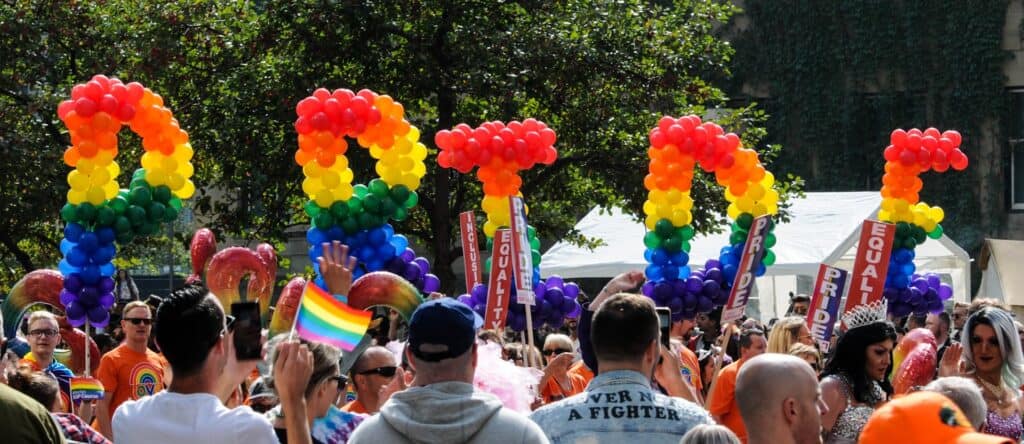
Pride Month is a commemoration of queer visibility and self-acceptance, an educational tool, and a beacon of hope for marginalised individuals. However, it’s also an ongoing political protest.
For centuries, LGBTQ+ individuals in the UK have been discriminated against, even criminalised in the past, just for expressing their sexual and gender identities. Pride aims to replace this attempt to erase LGBTQ+ people with visibility, allowing queer people to exist openly in the streets that they were once forced to hide in. And by creating a community, vulnerable youth and isolated individuals have been given a much-needed sense of belonging.
The LGBTQ+ community has experienced many victories over the years, from the decriminalisation of homosexuality and the legalisation of same sex marriage – but it’s not over yet. Pride is used to celebrate these triumphs while shedding light on the ongoing efforts of those still fighting for equality.
When Did Pride Month Start?
Many events have contributed to the inception of Pride Month, but there is one event in particular that stands out as the true catalyst – the 1969 Stonewall riots.
On 28 June 1969, police raided the Stonewall Inn, a popular gay bar in New York. This bar had been raided on many occasions over the years, and typically, people left quietly and without a fuss. But this time, the LGBTQ+ community fought back, which subsequently led to multi-day riots and a huge shift in the way queer people protested.
Exactly one year later, activists in America organised the very first Pride March, which back then was named the Christopher Street Liberation Day March. This evolved into an annual tradition, and as more and more Pride events took place across the month of June, it slowly became the official month of recognition for LGBTQ+ individuals.
The UK was quick to follow in the footsteps of America, also honouring June as the month to reflect and focus on gay and lesbian rights. However, British weather is pretty unpredictable, so Pride events in the UK often extend to July and August, too.
When Was the First Pride Parade in the UK?
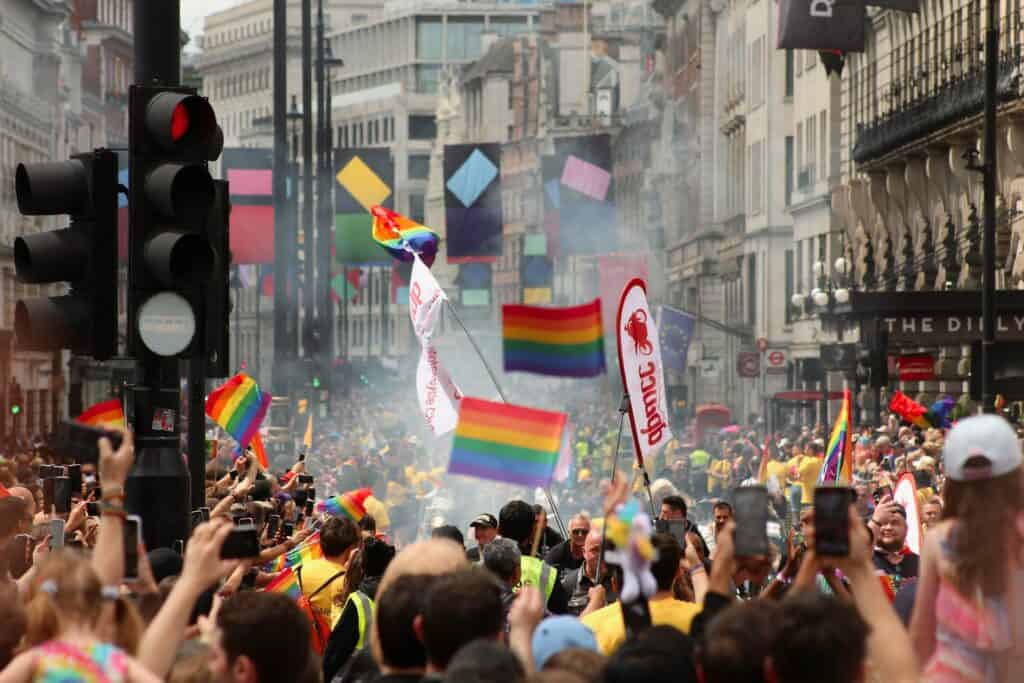
The first ever Pride march in the UK took place in London on Saturday 1 July 1972, which was the closest weekend to the anniversary of the Stonewall riots. There had already been smaller demonstrations and youth rallies years prior to this, organised by the GLF (British Gay Liberation Front) – a group founded in autumn 1970, but this was the first official Pride parade in the UK.
At this time, the decriminalisation of homosexuality was only partial. Homosexuality was only permitted in England and Wales for consenting adults over the age of 21 in absolute privacy. Public displays of affection remained illegal, so it took immense courage to attend this march.
Compared to the millions who attend London Pride nowadays, the first ever London Pride march consisted of roughly 2,000 people, but this was more than enough to keep the ball rolling year after year.
The Evolution of Pride Month
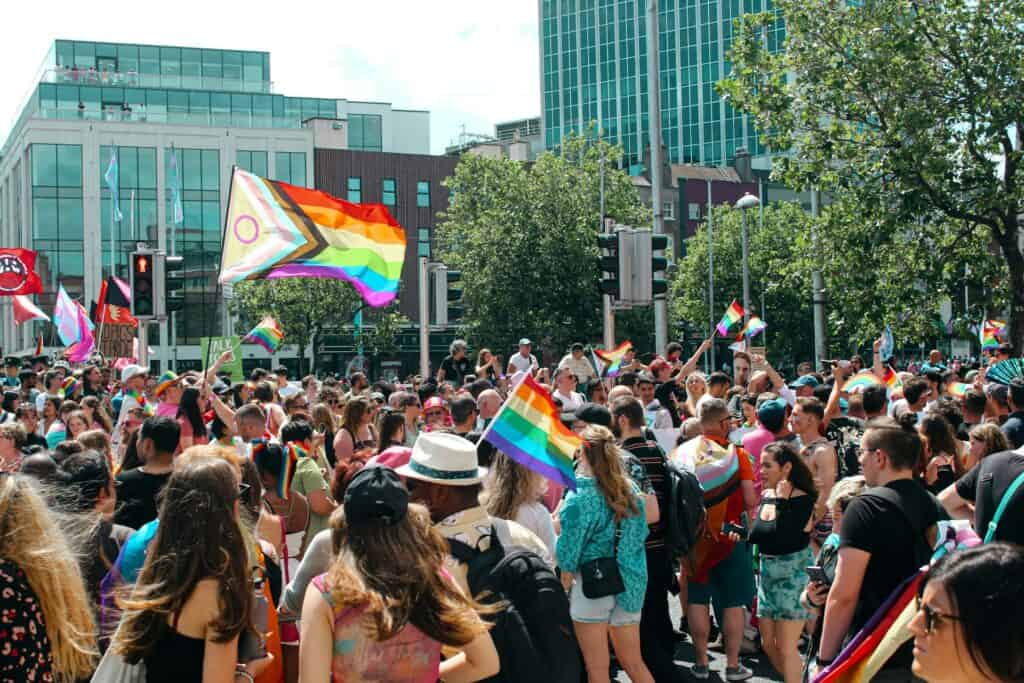
The concept of Pride quickly spread throughout the UK, and by the 1980s, there was a new wave to the movement. Pride at this point became a critical network for fundraising and support during the HIV and AIDS epidemic.
The late 1980s saw Margaret Thatcher and the Conservative government push back, introducing the Local Government Act, which banned local authorities from promoting homosexuality or teaching acceptability of homosexuality in schools. But this only spurred the LGBTQ+ community on more, leading to more and more Pride marches and protests all throughout the country.
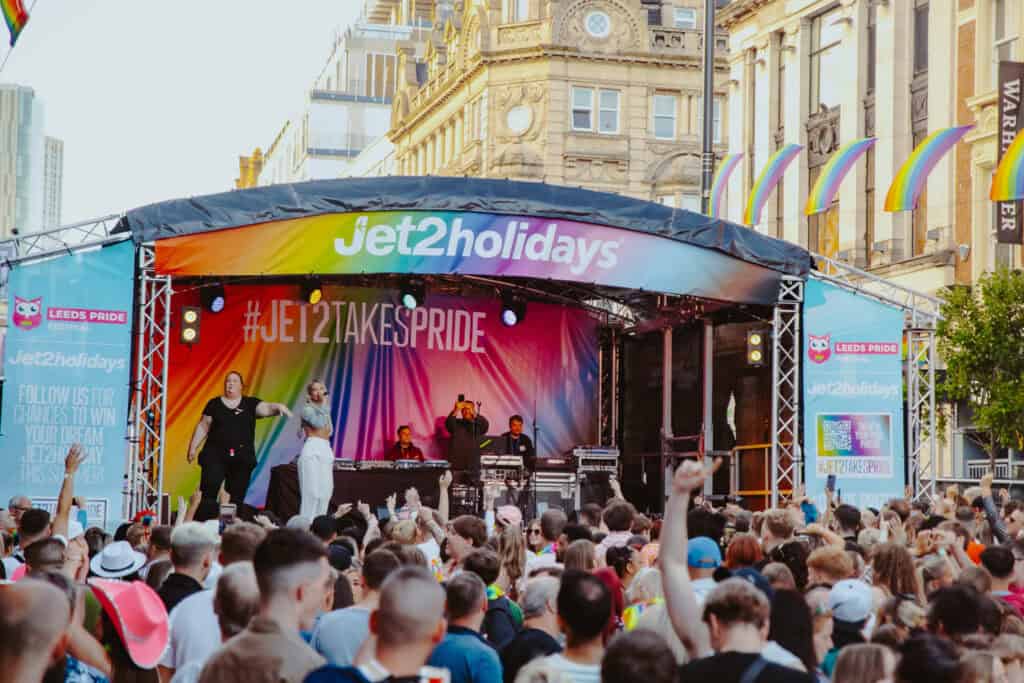
Nowadays, you don’t have to travel far to experience a Pride event. There’s a Pride parade in Leeds, Cardiff, Cornwall, Edinburgh, Brighton, Manchester, Dublin… pretty much every major city and small town in the UK.
Pride as We Know It Today
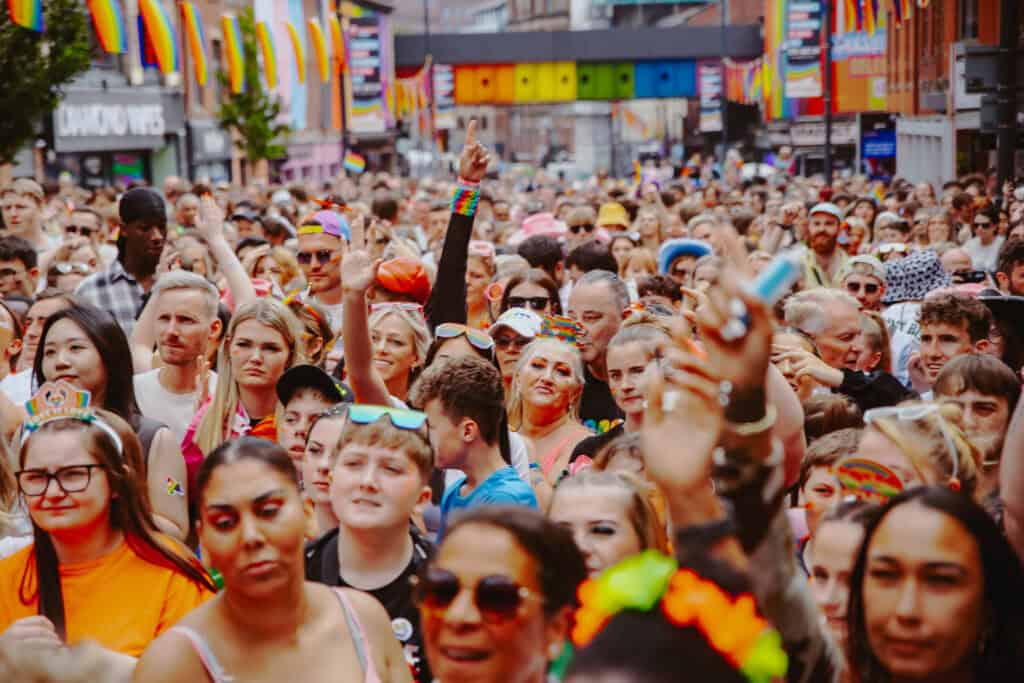
Pride began as an act of bravery and defiance, and a march that just a few thousand activists attended. Now, it’s a pivotal part of British culture celebrated by millions of people all over the country, even by those who aren’t members of the LGBTQ+ community.
While Pride has evolved over the decades, the message has stayed the same. The UK has made great strides in the acceptance and equality of LGBTQ+ individuals, but the same can’t be said for the rest of the world. In some countries, being gay is still a criminal offence and people remain heavily marginalised for their sexual orientation and gender identity.
Pride stands as a reminder that although we’ve made excellent progress, the fight for equality is still ongoing.